

Chernobyl's Black Fungus: The Mind-Bending Science of Radiosynthesis
Cladosporium sphaerospermum, the black fungus thriving inside Chernobyl's reactor, appears to 'eat' radiation via radiosynthesis. What is it doing, and what could it mean for space exploration?

Chernobyl's Black Fungus And The Mind‑Bending Idea of Radiosynthesis
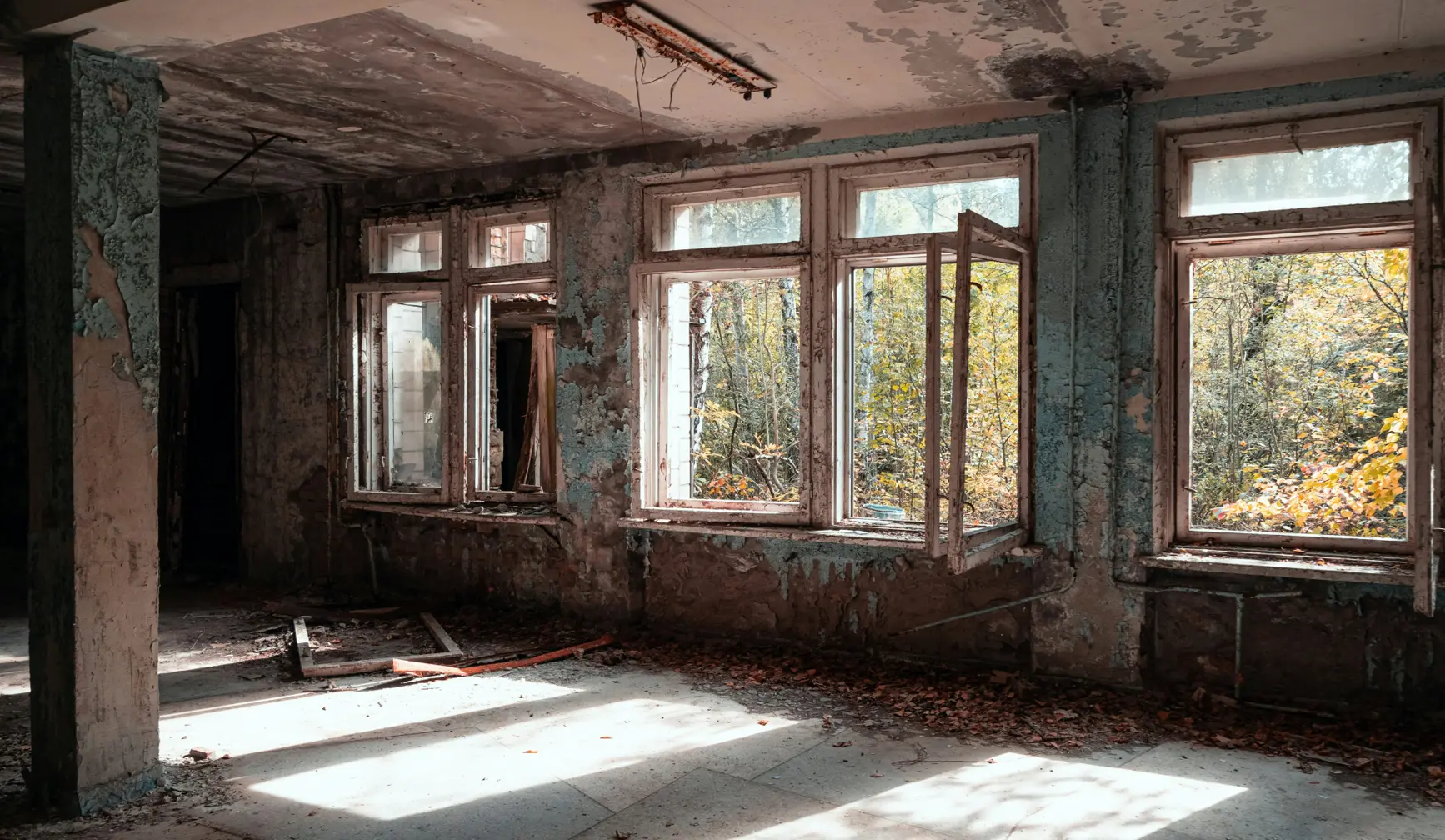
Deep inside one of the most radioactive buildings on Earth – the ruined Chernobyl reactor – something unexpected is quietly thriving: a velvety black fungus that seems to love ionizing radiation.
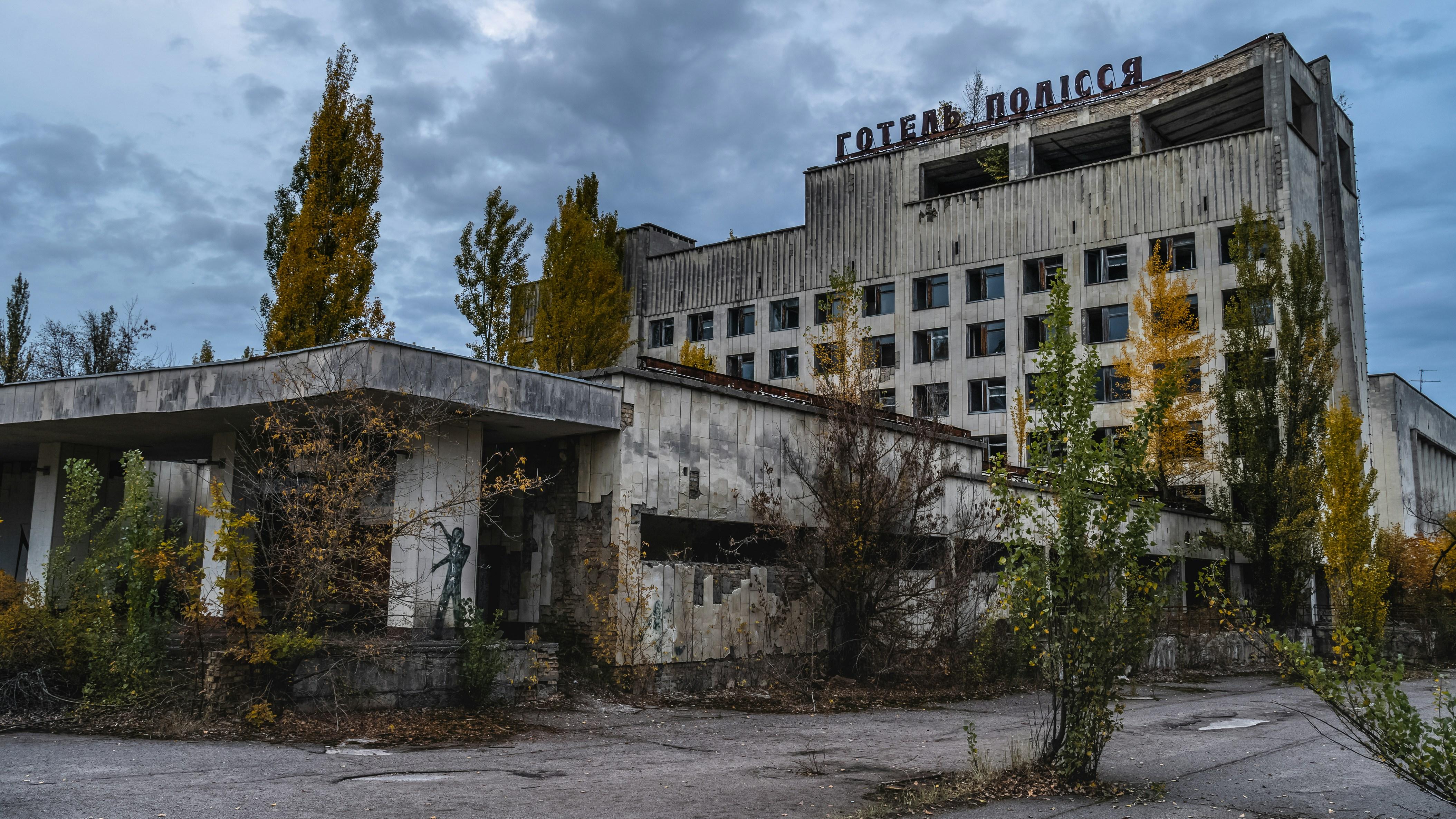
Cover photo: Viktor Hesse on Unsplash – Pripyat city in the Chernobyl Exclusion Zone (2020).
That fungus is called Cladosporium sphaerospermum. It has fascinated scientists for decades because it not only survives in high radiation, it appears to grow better when exposed to it.
This post is inspired by reporting from ScienceAlert, which gives a great overview of what we know (and don’t know) about this organism.
A Fungus Living Its Best Life at Chernobyl
In the late 1990s, a team led by microbiologist Nelli Zhdanova explored the Chernobyl Exclusion Zone to see what kind of life still existed around the destroyed reactor.
Inside the shelter surrounding Unit Four, they expected near‑sterility. Instead, they found a surprising community of fungi:
- 37 fungal species were documented
- Many were dark‑colored or black
- Cladosporium sphaerospermum was dominant in the samples
- It showed high levels of radioactive contamination, yet was clearly thriving
Even stranger, these fungi seemed to be most abundant exactly where radiation levels were highest.
Melanin: More Than Just a Shield?
One of the key clues lies in the fungus’s dark pigment: melanin.
We usually think of melanin as:
- The pigment that gives skin, hair, and eyes their color
- A protective shield against UV radiation
But for C. sphaerospermum, melanin might be doing something more exotic.
Researchers like Ekaterina Dadachova and Arturo Casadevall (Albert Einstein College of Medicine) found that:
- Exposing the fungus to ionizing radiation did not damage it the way it would most organisms
- In some conditions, the fungus actually grew better when bathed in ionizing radiation
- Radiation altered the behavior of melanin in ways that suggested it was doing interesting physics and chemistry at the molecular level
This led to a provocative idea:
Could melanin in this fungus be harvesting radiation somewhat like chlorophyll harvests light?
The Wild Hypothesis: Radiosynthesis
In a 2008 paper, Dadachova and Casadevall proposed a mechanism analogous to photosynthesis:
- Plants use chlorophyll to capture photons from sunlight and convert that energy into chemical energy.
- These melanized fungi might be using melanin to interact with ionizing radiation and alter their metabolic state, possibly gaining an energy advantage.
This hypothetical process has been informally called “radiosynthesis”:
Using ionizing radiation as an energy input to support biological processes, somewhat like photosynthesis uses visible light.
It’s important to be precise here:
- We do not yet have direct proof that the fungus is “feeding” on radiation the way plants feed on light.
- What we do have are strong hints that radiation changes melanin’s behavior and seems to correlate with enhanced growth and resilience.
What Experiments Have Shown So Far
Several lines of evidence make C. sphaerospermum so interesting:
1. Growth in Radiation
Experiments have shown that:
- Melanized fungi like C. sphaerospermum can grow faster or more robustly when exposed to ionizing radiation compared to non‑melanized controls.
- The radiation levels that are harmful to many organisms seem to be tolerated – or even beneficial – to these fungi.
2. Changes in Melanin Behavior
Under ionizing radiation, fungal melanin:
- Shows altered electronic properties
- Appears to change how it handles energy and electrons
This suggests melanin is not a passive pigment but an active player in how these fungi interact with their environment.
3. Space Experiments on the ISS
In 2022, researchers took C. sphaerospermum into space and exposed it to cosmic radiation on the exterior of the International Space Station.
They measured:
- Radiation passing through a petri dish with fungus
- Versus a control dish with just agar
Result:
- Less radiation passed through the fungal sample than through the control, indicating that the fungus – and its melanin – acted as a partial radiation shield.
This doesn’t prove radiosynthesis, but it does show that the fungus can attenuate radiation and survive in extreme environments.
Why Scientists Are Still Skeptical (In a Good Way)
As cool as the idea of radiosynthesis is, scientists are careful not to overstate it.
As noted in the ScienceAlert coverage and the work of researchers like Nils Averesch:
We have not yet clearly demonstrated a full energy‑harvesting pathway from ionizing radiation to usable biological energy.
Specifically, what we haven’t conclusively shown is:
- Carbon fixation driven by ionizing radiation (like CO₂ fixation in photosynthesis)
- Net metabolic gain that depends directly on radiation as an energy source
- A fully mapped biochemical pathway showing how absorbed radiation energy is converted into ATP or other high‑energy molecules
So right now, radiosynthesis is a compelling hypothesis, not a proven fact.
Radiation Shield, Energy Source, or Both?
There are two broad ways to think about what this fungus might be doing:
- Advanced Protection Strategy
- Melanin absorbs and dissipates harmful ionizing radiation
- This reduces DNA damage and boosts survival
- Any growth advantages are a side effect of being more robust, not direct “energy harvesting”
- Partial Energy Harvesting Mechanism
- Melanin alters its electronic state in response to radiation
- Some of that absorbed energy might be channeled into metabolic processes
- The fungus gains a small but meaningful energetic advantage in high‑radiation environments
Right now, the data is compatible with both interpretations. It might even be a mix:
melanin as both shield and primitive energy interface.
Why This Matters for Space and Extreme Environments
Even if radiosynthesis turns out to be weaker than early headlines suggest, C. sphaerospermum is still incredibly important:
- It demonstrates that life can adapt to extreme ionizing radiation.
- It offers a living material that can attenuate radiation, potentially useful as:
- A bio‑shield for spacecraft or habitats
- Part of radiation‑resistant coatings or materials
- It expands our imagination about how life might:
- Survive near cosmic radiation sources
- Adapt on Mars, Europa, or other harsh worlds
- Evolve in places where high‑energy particles are the norm
The idea that a simple fungus could help protect astronauts – or even slightly “harvest” radiation – is straight out of science fiction, yet rooted in real experimental data.
Other Melanized Fungi in Radiation
Cladosporium sphaerospermum isn’t alone.
Researchers have found that:
- The black yeast Wangiella dermatitidis shows enhanced growth under ionizing radiation
- Another species, Cladosporium cladosporioides, increases melanin production under gamma or UV radiation, but without the same growth boost
This suggests that:
- Melanin‑rich fungi have evolved diverse strategies to cope with or exploit radiation
- C. sphaerospermum might represent a particularly extreme or specialized adaptation
The Bigger Picture: Life Finds a Way
Whether or not radiosynthesis turns out to be a fully fledged energy pathway, one thing is clear:
Life is far more adaptable, clever, and creative than we often assume.
In a place where humans cannot safely linger, a humble black fungus is not just surviving:
- It’s using one of the most dangerous forces in the environment – ionizing radiation – as part of its strategy to thrive.
- It challenges our assumptions about what energy sources life can tap into.
- It opens doors to new biotechnologies, from radiation shields to radical bio‑materials.
The story of Chernobyl’s black fungus sits at the intersection of:
- Microbiology
- Physics
- Space exploration
- Extreme environment adaptation
And it’s a perfect reminder that even in the most hostile places, life finds a way.
Further Reading & References
- ScienceAlert overview
O'Neill, I. (2020). Chernobyl Fungus Appears to Have Evolved an Incredible Ability. ScienceAlert.
Available at: https://www.sciencealert.com/chernobyl-fungus-appears-to-have-evolved-an-incredible-ability - Foundational radiosynthesis paper
Dadachova, E., Bryan, R. A., Huang, X., Moadel, T., Schweitzer, A. D., Aisen, P., Nosanchuk, J. D., & Casadevall, A. (2007).
Ionizing Radiation Changes the Electronic Properties of Melanin and Enhances the Growth of Melanized Fungi.
PLoS ONE, 2(5), e457. https://doi.org/10.1371/journal.pone.0000457 - Fungi in the Chernobyl reactor environment
Zhdanova, N. N., Vasilevskaya, A. I., Vokina, V. A., & Artyshkova, L. V. (2000).
Fungi in the Chernobyl nuclear power plant. Mycological Research, 104(12), 1421–1426. - Melanized fungi and radiation – broader context
Casadevall, A., & Nosanchuk, J. D. (2017).
Melanin in Fungi. In Heitman, J. et al. (Eds.), The Fungal Kingdom (pp. 207–221). ASM Press. - Space experiments with Chernobyl fungus
Shunk, G. K. et al. (2020).
Radiation shielding potential of Chernobyl black fungus on the International Space Station (ISS).
(Summarized in multiple reports, including NASA and independent preprints exploring melanin‑based bio‑shields.)