

Engineering
System Simulation: Modeling, Pros & Cons, and Model Development
Introduction to system simulation and modeling. Covers deterministic vs probabilistic models, linear programming, discrete vs continuous simulation, pros and cons, and the model development process.
AK
Aysegul Karadan
•5 min read
#simulation #engineering #modeling #industrial-engineering #system-simulation #what-is-system-simulation #deterministic-vs-probabilistic #linear-programming #discrete-event-simulation #simulation-model-development
System Simulation: An Introduction
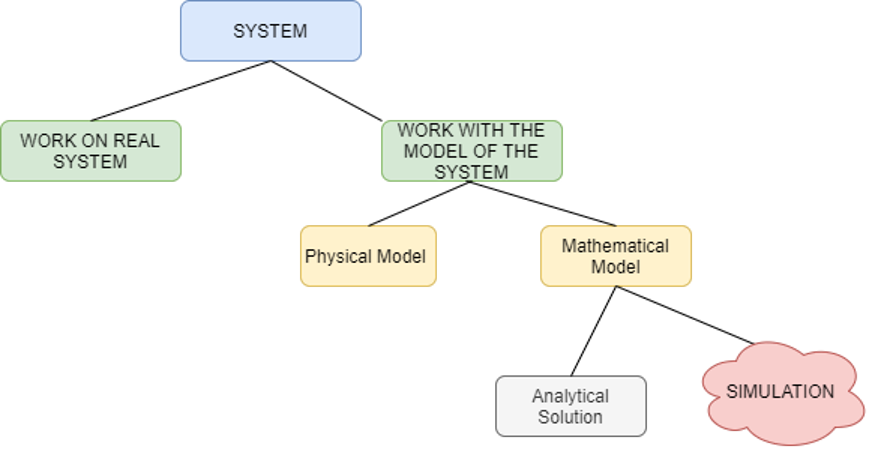
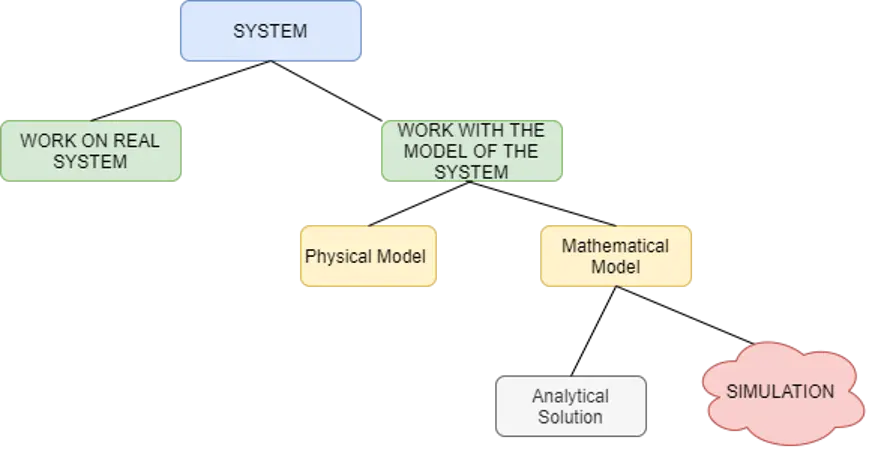
Simulation is a powerful tool that enables understanding and prediction of complex systems by using an imitative model of the system. When real data is difficult to measure or inaccessible, simulation provides logical insights into how a system behaves.
Key definitions:
- System — the set of physical elements whose behavior we want to analyze
- Model — a statistical description of the system's activities
- Simulation — the imitation of how a system's processes evolve over time
Types of Models
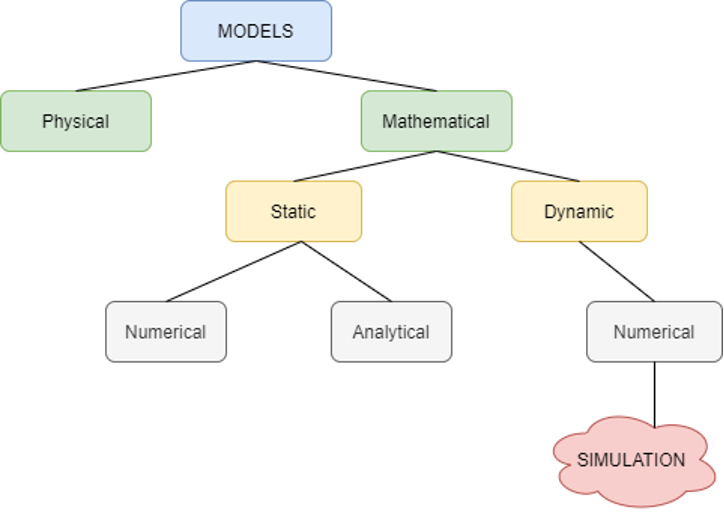
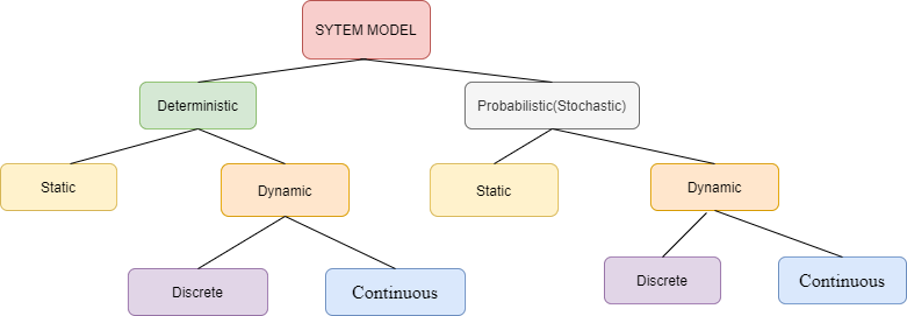
Deterministic vs. Probabilistic
- Deterministic: Input values are certain. Example:
10,000 chairs × 4 legs = 40,000 chair legs - Probabilistic: Some data is uncertain; statistical probabilities are used (e.g., Monte Carlo method)
Data Types
- Qualitative — cannot be measured numerically
- Quantitative (Discrete) — only certain values (e.g., daily nursery count)
- Quantitative (Continuous) — any value, changes over time (e.g., temperature, weight)
Linear Programming
Linear programming is the most common deterministic modeling technique for planning and decision-making. It has three components:
- Decision Variables — the unknowns (e.g., X1 = Milk, X2 = Flour)
- Constraints — restrictions on variables (e.g., X1 ≤ 1000 ml)
- Objective Function — the formula to optimize (e.g., C = 200X1 + 150X2 + ...)
Pros and Cons of Simulation
Pros:
- Compare solutions to alternatives
- Better experimental control than the real world
- Visualize complex relationships
- Optimize without working with real systems
Cons:
- Model creation requires special training
- Results can be hard to interpret
- Time-consuming and expensive
- Risk of incorrect usage
Characterization of the Simulation Model
Before starting simulation, decide:
- Probabilistic or Deterministic? — Are inputs certain or stochastic?
- Dynamic or Static? — Is time a significant variable?
- Discrete or Continuous? — Do variables change at discrete points or continuously?
Model Development Process

- Problem Statement — Define goals and objectives
- Conceptual Model — Theoretical model of the system
- Specification Model — Formal notation and structure
- Computational Model — Algorithmic/mathematical implementation
- Verification — Check computed results
- Validation — Confirm the model accurately represents the system
Elements of Probability
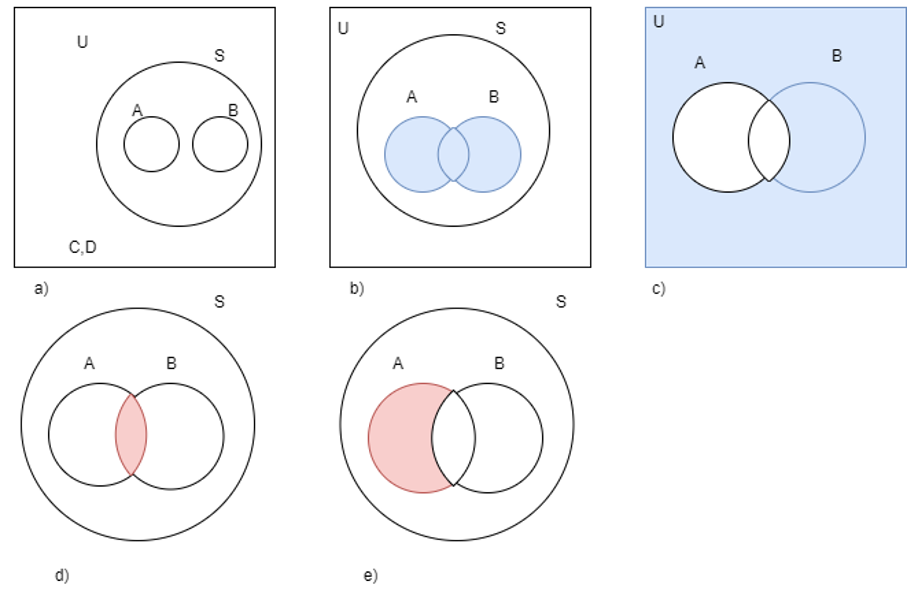
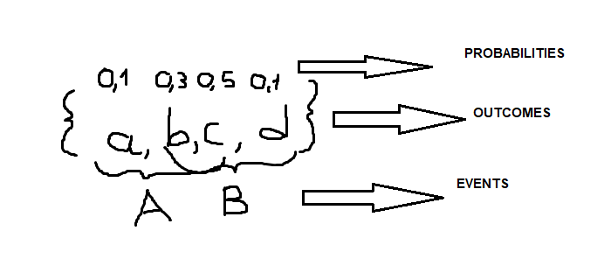
- Sample Space (S) — all possible outcomes of an experiment
- Event — a set of expected outcomes
- Conditional Probability:
P(A|B) = P(A∩B) / P(B)
Example: 45% fail physics, 35% fail math, 25% fail both. Probability of failing math given failing physics:
P(M|P) = P(M∩P) / P(P) = 0.25 / 0.45 ≈ 0.55
References
- Sainani, K. L. (2015). "What is Computer Simulation?" PM&R, 7(12).
- Durán, J. M. (2020). "What is a Simulation Model?" Minds and Machines, 30(3).
- Banks, J. (1999). "Introduction to simulation." Winter Simulation Conference.